

The Ultimate Buyer’s Guide to Choosing a Reliable Cocoa Shell Supplier
A Practical Procurement Guide for Biomass, Animal Feed, Organic Fertilizer, Biochar, and Industrial Buyers
Table of Contents
- Introduction
- Why Choosing the Right Supplier Matters
- Understanding Cocoa Shell Quality
- The Seven Essential Supplier Checks
- Understanding Laboratory Analysis
- Cocoa Shell Specifications Explained
- Common Mistakes Buyers Make
- Frequently Asked Questions
- Buyer Procurement Checklist
- Why Buyers Choose Nigerian Cocoa Shells
- Why Enbri Nig. Ltd.
- Request a Quotation
Introduction
Finding a cocoa shell supplier is easy.
Finding one you can confidently rely on for consistent quality, transparent communication, and long-term business is far more difficult.
Every year, buyers around the world source cocoa shells for biomass fuel, animal feed, organic fertilizer, biochar production, composting, and other industrial applications. While demand continues to grow, so does the number of suppliers entering the international market.
For procurement professionals, this creates both opportunity and risk.
Choosing the wrong supplier can lead to delayed shipments, inconsistent product quality, documentation issues, unexpected costs, and disrupted production schedules. Choosing the right supplier, however, creates stability, improves operational efficiency, and supports long-term commercial success.
For this reason, experienced buyers evaluate much more than price.
They look for suppliers who communicate professionally, understand export procedures, maintain consistent product quality, and operate with transparency throughout the procurement process.
Whether you are purchasing cocoa shells for energy generation, agricultural applications, or industrial processing, proper supplier evaluation can significantly reduce commercial risk and improve supply chain reliability.
This guide has been developed to help international buyers make informed procurement decisions by highlighting the seven essential areas every supplier should be able to demonstrate before a purchasing agreement is reached.
Rather than focusing on marketing claims, this article explains the practical considerations procurement professionals should evaluate when selecting a cocoa shell supplier.
Procurement Insight
Successful international trade is built on confidence, consistency, and communication—not simply on competitive pricing.
Why Choosing the Right Supplier Matters
Price is often the first figure buyers compare.
However, experienced procurement professionals know that the lowest quotation does not always represent the lowest overall cost.
A supplier offering an attractive price today may create significantly higher costs tomorrow if shipments are delayed, documentation is incomplete, product quality is inconsistent, or communication becomes unreliable.
International procurement involves more than purchasing a commodity.
It involves selecting a business partner capable of meeting agreed specifications, maintaining consistent quality, supporting export documentation, and responding professionally whenever challenges arise.
Consider two suppliers.
The first offers cocoa shells at the lowest price but struggles to answer technical questions, provides limited documentation, and responds slowly to enquiries.
The second supplier charges slightly more but communicates clearly, supplies detailed product specifications, provides representative laboratory analysis, understands export procedures, and consistently delivers according to agreed terms.
Which supplier presents lower commercial risk?
For most procurement teams, the answer is obvious.
The true cost of procurement extends beyond the purchase price.
Shipment delays can interrupt production.
Documentation errors can create customs delays.
Inconsistent product quality can affect manufacturing efficiency.
Poor communication can damage business relationships.
When these risks are considered, selecting a dependable supplier often delivers greater long-term value than accepting the cheapest quotation.
Professional buyers therefore evaluate suppliers using a balanced approach that considers quality, reliability, transparency, communication, technical knowledge, and long-term partnership potential.
Buyer Tip
Never compare quotations until you have confirmed that each supplier is offering comparable product specifications. A lower price for lower-quality material rarely represents better value.
Understanding Cocoa Shell Quality
Not all cocoa shells are the same.
Although cocoa shells are a natural by-product of cocoa bean processing, their quality can vary considerably depending on factors such as the origin of the cocoa beans, processing methods, storage conditions, handling practices, and moisture control.
These variations can directly influence performance in biomass systems, animal feed production, organic fertilizer manufacturing, biochar processing, and other industrial applications.
Understanding these differences allows buyers to compare suppliers more effectively and avoid unexpected performance issues after shipment.
Some of the most important quality characteristics include:
Moisture Content
Moisture content is one of the first parameters buyers should evaluate.
Lower moisture generally contributes to improved storage stability and, in biomass applications, better combustion efficiency. Excess moisture may increase transportation costs, reduce energy efficiency, and increase the risk of mould development during storage.
Ash Content
Ash represents the mineral residue remaining after combustion.
For biomass users, ash content can influence combustion system performance and ash disposal requirements. Understanding ash characteristics helps buyers determine whether the material is appropriate for their equipment and operational objectives.
Crude Fibre
Crude fibre is particularly relevant for buyers involved in animal nutrition and agricultural applications.
Different industries may require different fibre characteristics depending on the intended use of the cocoa shells.
Physical Appearance
Colour, cleanliness, particle size, and the presence of foreign materials also provide useful indicators of handling quality.
Well-handled cocoa shells should be clean, dry, and free from excessive contamination that could affect storage, processing, or end-use performance.
Packaging
Packaging plays an important role in maintaining product quality throughout transportation.
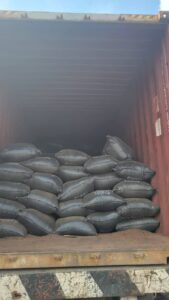
Depending on buyer requirements, cocoa shells may be supplied in woven polypropylene bags, jumbo bags, or bulk container loading.
The chosen packaging should protect the product from unnecessary moisture exposure while supporting efficient handling during international transport.
Procurement Insight
Product quality is not determined by appearance alone. Buyers should request documented specifications and representative laboratory analysis before making purchasing decisions.
The Seven Essential Supplier Checks
Selecting the right cocoa shell supplier involves more than requesting a quotation. Experienced procurement professionals conduct a structured evaluation to determine whether a supplier can consistently meet commercial and technical requirements.
The following seven checks provide a practical framework for evaluating cocoa shell suppliers before entering into a purchasing agreement.
1. Verify the Supplier’s Legitimacy
Every procurement process should begin with one simple question:
Is this a legitimate business?
International trade requires buyers to place considerable trust in suppliers who may be located thousands of kilometres away. Before discussing pricing or negotiating commercial terms, buyers should verify that the supplier is a genuine business operating transparently and legally.
A professional supplier should be willing to provide information such as:
- Company registration details
- Export registration or export licence (where applicable)
- Business address
- Corporate email address
- Company website
- Telephone and WhatsApp contact details
- Primary business contact
This information helps buyers confirm that they are dealing with a legitimate organisation rather than an anonymous trading entity.
Many buyers also review a supplier’s online presence. A professional website, active business profile, and consistent contact information demonstrate that the company takes its business seriously.
However, company age should never be the only measure of credibility.
While an established business may have a longer trading history, professionalism is demonstrated through transparency, organisation, and the ability to consistently meet customer expectations.
The objective is not simply to determine how old a supplier is.
The objective is to determine whether the business appears capable of supporting a long-term international partnership.
Buyer Tip
Verify the supplier before requesting the lowest price. Confidence should come before negotiation.
2. Why Product Specifications Matter Before You Compare Prices
One of the most common procurement mistakes is comparing quotations before confirming that suppliers are offering comparable products.
Two suppliers may both advertise “cocoa shells,” yet the products can differ significantly in quality, moisture content, cleanliness, particle size, packaging, and intended application.
Without detailed specifications, price comparisons can be misleading.
Professional suppliers should provide a product specification sheet that clearly describes the characteristics of the material being offered.
Typical specifications include:
- Moisture content
- Ash content
- Crude fibre
- Gross energy value (where available)
- Colour and appearance
- Particle size
- Foreign matter
- Packaging options
- Typical applications
Each specification helps buyers determine whether the cocoa shells are suitable for their intended use.
For example:
Biomass Energy Producers
Biomass operators often focus on:
- Moisture content
- Energy value
- Ash characteristics
- Consistency between shipments
Lower moisture generally contributes to improved storage and combustion efficiency.
Animal Feed Manufacturers
Feed manufacturers may place greater emphasis on:
- Crude fibre
- Cleanliness
- Freedom from contaminants
- Product consistency
Organic Fertilizer and Compost Producers
These buyers frequently evaluate:
- Organic composition
- Moisture content
- Ease of handling
- Storage stability
Every industry has different priorities.
A supplier should understand those priorities and recommend specifications appropriate for the buyer’s intended application rather than offering identical information to every customer.
Procurement Insight
Product specifications should answer technical questions before commercial negotiations begin.
3. Understanding Laboratory Analysis and What Buyers Should Request
A specification sheet describes what a supplier expects to deliver.
Laboratory analysis provides measured information about the product itself.
For procurement professionals, laboratory analysis serves as an additional layer of confidence during supplier evaluation.
Independent laboratory testing helps verify important quality characteristics that may influence product performance in industrial applications.
Typical laboratory parameters include:
- Moisture content
- Ash content
- Gross energy value
- Crude fibre
- Heavy metals
- Mycotoxins (where applicable)
- Other physical or chemical properties relevant to the buyer’s industry
These results enable buyers to compare suppliers using measurable data rather than marketing claims.
It is important to understand that a laboratory report usually represents the analysis of a specific sample at a particular point in time.
For this reason, buyers should ask suppliers several practical questions:
- Was the testing performed by an independent laboratory?
- Which testing methods were used?
- Does the report represent a recent production sample?
- Can updated testing be arranged if required?
- How frequently is product quality monitored?
Reliable suppliers welcome these questions because they demonstrate that the buyer is conducting responsible due diligence.
What Buyers Should Look for in a Laboratory Report
A professional laboratory report should clearly identify:
- The testing laboratory
- Date of analysis
- Product tested
- Test methods used
- Measured results
- Units of measurement
Reports containing this information allow procurement teams to make informed technical comparisons between suppliers.
Laboratory Analysis Is Only One Part of Supplier Evaluation
Although laboratory testing provides valuable technical information, it should not be viewed in isolation.
A laboratory report cannot replace:
- Consistent product quality
- Professional communication
- Reliable logistics
- Transparent documentation
- Good customer service
The strongest suppliers combine technical quality with operational reliability.
Buyer Tip
Laboratory analysis should support procurement decisions—not replace supplier evaluation.
4. Evaluate the Supplier’s Supply Chain
A supplier’s ability to deliver consistently depends on more than having a product available today. It depends on the strength and reliability of its supply chain.
Before committing to a long-term purchasing agreement, buyers should understand how the supplier sources, handles, stores, and prepares cocoa shells for export. A dependable supply chain reduces the risk of inconsistent quality, shipment delays, and supply interruptions.
Ask questions such as:
- Where are the cocoa shells sourced?
- How are suppliers selected and monitored?
- What quality checks are carried out before shipment?
- How are the cocoa shells stored before export?
- What measures are taken to prevent contamination or excessive moisture?
- Can the supplier explain their quality control process?
These questions are particularly important for buyers supplying industries where consistent quality is essential, including biomass power plants, animal feed manufacturers, and organic fertilizer producers.
Although cocoa shells are an agricultural by-product and some natural variation is expected, reputable suppliers should have procedures in place to minimise unnecessary variation and maintain consistent quality standards.
Why Traceability Matters
International buyers increasingly want to understand where their products originate.
Traceability does not necessarily mean tracing every shipment back to an individual farm. Instead, it means maintaining records that allow the supplier to identify the source of the material and demonstrate how it has been handled throughout the supply chain.
Good traceability supports:
- Better quality control
- Faster resolution of quality concerns
- Greater transparency
- Increased buyer confidence
A supplier that can explain its sourcing and quality management process demonstrates professionalism and preparedness.
Procurement Insight
A reliable supply chain is built on planning, documentation, and quality control—not good luck.
5. Assess Communication and Responsiveness
Communication is often overlooked during supplier evaluation, yet it is one of the strongest indicators of future performance.
In international trade, clear and timely communication helps prevent misunderstandings, documentation errors, and costly shipment delays.
Many procurement professionals believe that the way a supplier communicates before receiving an order is a good indication of how they will communicate after the order has been placed.
When evaluating a supplier, consider the following:
- Are enquiries answered promptly?
- Are responses clear and complete?
- Does the supplier answer technical questions confidently?
- Are documents provided when requested?
- Are commitments followed by action?
- Does the supplier communicate professionally when unexpected issues arise?
Professional communication is about more than replying quickly. It is about providing accurate information, managing expectations, and maintaining transparency throughout the business relationship.
Suppliers who communicate consistently help buyers plan more effectively and reduce operational uncertainty.
The Cost of Poor Communication
Poor communication can lead to:
- Incorrect shipping instructions
- Delayed documentation
- Customs clearance issues
- Production interruptions
- Increased logistics costs
- Damaged commercial relationships
These problems are often preventable when both parties communicate clearly and proactively.
Buyer Tip
A supplier who communicates professionally before the first order is more likely to remain dependable after the shipment has been dispatched.
6. Confirm Export Capability
Producing a quality product is only part of international trade.
Successfully delivering that product to an overseas buyer requires knowledge of export procedures, logistics, documentation, and shipping requirements.
Before selecting a supplier, buyers should understand whether the supplier has the capability to manage the export process effectively.
Important areas to discuss include:
- Available Incoterms (FOB, CIF, CFR and others)
- Preferred loading ports
- Packaging options
- Container loading capacity
- Export documentation
- Inspection requirements
- Shipping coordination
- Estimated lead times
A supplier who understands these requirements is generally better equipped to minimise delays and support a smooth transaction.
Common Export Documents
Depending on the destination country and contract terms, export documentation may include:
- Commercial Invoice
- Packing List
- Bill of Lading
- Certificate of Origin
- Phytosanitary Certificate (where applicable)
- Inspection Certificate (if required)
- Other documents requested by the importing country
Buyers should confirm document requirements before production and shipment begin to avoid unnecessary delays at the destination port.
Packaging and Container Loading
Packaging should protect the product during transportation and support efficient handling.
Depending on customer requirements, cocoa shells may be supplied in:
- Woven polypropylene bags
- Jumbo bags
- Bulk container loading
The supplier should explain the available packaging options and recommend the most suitable solution based on the buyer’s intended use and shipping method.
Procurement Insight
Strong export capability is measured not only by the ability to ship goods, but also by the ability to prepare accurate documentation and communicate effectively throughout the export process.
7. Don’t Choose a Supplier Based on Price Alone
Competitive pricing is an important part of procurement, but it should never be the only factor influencing supplier selection.
A quotation that appears less expensive today may become significantly more costly if it results in delayed shipments, inconsistent quality, incomplete documentation, or poor communication.
Experienced procurement teams evaluate the total value offered by a supplier rather than focusing only on the purchase price.
Consider the following factors alongside price:
- Product consistency
- Quality specifications
- Laboratory analysis
- Communication and responsiveness
- Documentation accuracy
- Supply reliability
- Export capability
- Problem-solving ability
- Long-term partnership potential
In many cases, paying slightly more for a dependable supplier results in lower overall operating costs through reduced disruptions, fewer quality issues, and stronger business relationships.
The Difference Between Price and Value
Price is what you pay.
Value is what you receive.
A dependable supplier contributes more than a shipment of cocoa shells. They contribute confidence, consistency, and support throughout the procurement process.
That is why many successful importers prioritise long-term reliability over short-term savings.
Buyer Tip
The lowest quotation is not always the best business decision. Evaluate the supplier as carefully as you evaluate the product.
Conclusion
Selecting a cocoa shell supplier is not simply a purchasing decision—it is the beginning of a business relationship.
The seven checks discussed in this guide provide a practical framework for evaluating suppliers based on professionalism, transparency, technical capability, communication, and operational reliability.
Buyers who invest time in proper supplier evaluation are more likely to build stable supply chains, reduce commercial risk, and establish long-term partnerships that create value for both parties.
Common Mistakes Buyers Make When Selecting a Cocoa Shell Supplier
Even experienced procurement professionals can make mistakes when sourcing agricultural commodities. While every purchasing decision carries some level of risk, many of the most common issues can be avoided through proper supplier evaluation and clear communication.
Below are several mistakes buyers should avoid when selecting a cocoa shell supplier.
1. Choosing a Supplier Based Only on Price
A low quotation may appear attractive, but it does not always represent the best overall value.
Factors such as inconsistent product quality, delayed shipments, inaccurate documentation, or poor communication can quickly outweigh any initial cost savings.
The objective should be to identify a supplier capable of delivering consistent quality, reliable service, and long-term value.
2. Failing to Request Product Specifications
Some buyers place orders without reviewing the product’s technical specifications.
Without information such as moisture content, ash content, crude fibre, particle size, and packaging options, it becomes difficult to determine whether the cocoa shells are suitable for the intended application.
Always compare specifications before comparing prices.
3. Ignoring Laboratory Analysis
Laboratory analysis provides valuable technical information that supports procurement decisions.
Although a laboratory report represents a sample rather than every future shipment, it helps buyers understand key quality characteristics and compare suppliers more effectively.
Whenever possible, request recent laboratory analysis from a reputable testing laboratory.
4. Overlooking Export Capability
A supplier may have an excellent product but limited experience with export documentation, logistics, or shipping coordination.
Before placing an order, confirm that the supplier understands international trade procedures and can prepare the documentation required for your destination country.
5. Waiting Until Shipment to Clarify Commercial Terms
Questions relating to Incoterms, payment methods, packaging, inspection requirements, and documentation should be resolved before production or shipment begins.
Clear agreements reduce misunderstandings and help prevent unnecessary delays.
6. Underestimating the Importance of Communication
Strong communication contributes significantly to a successful business relationship.
A supplier who provides prompt, accurate, and transparent responses is generally easier to work with throughout the procurement process.
Procurement Insight
Successful procurement is not about finding the cheapest supplier. It is about selecting the supplier who offers the best balance of quality, reliability, transparency, and long-term value.
Supplier Evaluation Checklist
Before placing your next order, use this checklist to evaluate potential suppliers.
Company Verification
☐ Company registration confirmed
☐ Export registration verified (where applicable)
☐ Business address confirmed
☐ Corporate email verified
☐ Company website reviewed
Product Quality
☐ Product specification received
☐ Moisture content reviewed
☐ Ash content reviewed
☐ Crude fibre information available
☐ Packaging options confirmed
Technical Documentation
☐ Laboratory analysis received
☐ Test methods identified
☐ Date of analysis confirmed
☐ Quality parameters reviewed
Supply Chain
☐ Product sourcing explained
☐ Storage practices discussed
☐ Quality control process understood
☐ Traceability information available
Export Capability
☐ Export documents confirmed
☐ Incoterms agreed
☐ Loading port confirmed
☐ Lead time discussed
Communication
☐ Technical questions answered
☐ Commercial terms clarified
☐ Response time satisfactory
☐ Communication professional
If you can confidently check each item above, you are likely working with a supplier who takes international trade seriously.
Why Buyers Choose Nigerian Cocoa Shells
Nigeria is one of the world’s leading cocoa-producing countries, making it an important source of cocoa by-products, including cocoa shells.
For international buyers, sourcing cocoa shells from Nigeria offers several advantages.
Reliable Availability
The country’s cocoa industry generates significant quantities of cocoa shells throughout the year, supporting consistent commercial supply for export markets.
Strategic Export Access
Nigeria’s major seaports provide convenient access to international shipping routes serving Europe, Asia, the Middle East, and other global markets.
Suitable for Multiple Industries
Nigerian cocoa shells are widely used in:
- Biomass fuel
- Animal feed
- Organic fertilizer
- Compost production
- Biochar manufacturing
- Industrial processing
Their versatility makes them an attractive raw material for a broad range of applications.
Growing Export Experience
Nigeria has a long history of agricultural exports. Many exporters understand international trade requirements and work closely with freight forwarders, inspection agencies, and logistics providers to facilitate overseas shipments.
Why Enbri Nig. Ltd.
At Enbri Nig. Ltd., we understand that purchasing cocoa shells is more than a commercial transaction—it is the beginning of a business relationship built on trust, communication, and consistency.
Although our company was registered in 2025, our focus has always been on building confidence through professionalism rather than relying on years in business as our primary selling point.
We believe buyers deserve clear information, honest communication, and responsive service throughout the procurement process.
Our commitment includes:
- Transparent communication
- Export-quality cocoa shells sourced from Nigeria
- Representative laboratory analysis where available
- Product specification sheets
- Flexible packaging options
- Support with export documentation
- Professional assistance from enquiry through shipment
We encourage every prospective buyer to conduct proper due diligence before selecting a supplier—including us.
Long-term partnerships are built on transparency, reliability, and consistent performance, and those principles guide the way we do business.
Final Thoughts
Selecting the right cocoa shell supplier requires careful evaluation.
By verifying legitimacy, reviewing product specifications, requesting laboratory analysis, understanding the supplier’s supply chain, assessing communication, confirming export capability, and looking beyond price, buyers can significantly reduce procurement risk.
Successful international trade is not based solely on products.
It is built on trust, preparation, and dependable partnerships.
The time invested in evaluating a supplier today can help prevent costly challenges tomorrow and lay the foundation for a long-term business relationship that benefits both parties.
Request a Quotation
If your business is looking for a reliable supplier of export-quality cocoa shells from Nigeria, Enbri Nig. Ltd. would be pleased to discuss your sourcing requirements.
Whether you require product specifications, representative laboratory analysis, packaging information, or export guidance, our team is ready to assist.
We welcome enquiries from biomass energy companies, animal feed manufacturers, organic fertilizer producers, biochar manufacturers, commodity traders, and industrial buyers worldwide.
Contact Enbri Nig. Ltd.
Email: info@enbrinigltd.com.ng
Tel/WhatsApp:
+234 913 783 4286
+234 811 026 2245
Website: https://enbrinigltd.com.ng