Cocoa Shell Price in Cambodia: What Importers Should Know Before Buying from Nigeria
Cambodian companies looking to import cocoa shells from Nigeria often begin with a simple question:
How much does cocoa shell cost per metric ton in Cambodia?
There is no single answer.
Cocoa shells are traded internationally under different specifications, quantities, packaging arrangements and shipping terms. A price quoted FOB Nigeria is also very different from a price quoted CFR/CNF or CIF Cambodia.
For an importer, the more useful question is:
What will my actual landed cost be for the specification and quantity I need?
This guide explains how Cambodian buyers can evaluate cocoa shell prices, what historical trade data can tell us about the Nigeria-Cambodia market, which costs should be considered, and what information a buyer should provide when requesting a quotation from a Nigerian supplier.
Is There a Fixed Cocoa Shell Price in Cambodia?
No.
There is no single international market price that applies to every shipment of cocoa shells.
The commercial price can vary according to:
- Product quality
- Moisture content
- Ash content
- Foreign matter
- Particle size
- Calorific value
- Packaging
- Order quantity
- Loading port
- Destination port
- Ocean freight
- Incoterm
- Inspection requirements
- Payment terms
- Shipment timing
A buyer purchasing 25 MT under one specification may receive a different quotation from a buyer purchasing 100 MT or arranging recurring monthly shipments.
This is why comparing two cocoa shell prices without checking what each quotation includes can produce a misleading result.
Buyers who first want to understand the material itself can also read our guide to what cocoa shells are, their industrial uses and global demand.
What Does Trade Data Tell Us About Cocoa Shell Prices in Cambodia?
Historical trade statistics can provide useful market context, but they should not be treated as a current price list.
Cocoa shells, husks, skins and other cocoa waste are generally classified under HS 180200 at the six-digit international level.
Cambodia recorded significant imports under HS 180200 in 2024 from several international origins. This demonstrates that there is an established market for cocoa-related agricultural residues in Cambodia.
However, an important point for buyers is that customs trade values are not necessarily equivalent to today’s supplier quotation.
Reported values can vary because of:
- Product differences
- Transaction timing
- Commercial terms
- Freight arrangements
- Declared customs values
- Packaging
- Quality
- Individual shipment circumstances
Therefore, historical trade data should be used to understand market activity and trade flows, rather than assuming that a particular historical figure represents the current price of Nigerian cocoa shells.
Historical trade data is a reference — not a quotation
For example, if a trade database reports an average value of US$X per metric ton, a Cambodian importer should not automatically assume that a Nigerian supplier will offer the same price today.
The correct approach is to request a quotation based on:
Quantity + specification + packaging + destination + Incoterm + shipment period.
That produces a much more meaningful commercial comparison.
Is Nigeria Already Supplying Cocoa Shells to Cambodia?
Yes.
Historical trade records show trade in HS 180200 cocoa shells, husks, skins and other cocoa waste between Nigeria and Cambodia.
This is commercially relevant because it demonstrates that Nigerian origin is already represented in the Cambodia market.
However, trade databases can show different figures depending on whether the data is viewed from the exporting country’s side or the importing country’s side.
For this reason, buyers should avoid treating a single database figure as proof of a current market price or current shipment volume.
The more useful conclusion is simply this:
Nigeria is an established origin in the international trade of cocoa shells and related cocoa waste, and Cambodian buyers can evaluate Nigerian supply alongside other origins.
For an importer, the next step is to compare the actual product specification and landed cost.
Why Nigerian Cocoa Shell Prices Can Differ From Other Origins
Cambodian buyers may compare Nigerian cocoa shells with material from Indonesia, Malaysia, Cameroon, Ghana or other origins.
That comparison is reasonable.
However, the buyer should compare equivalent specifications and commercial terms.
For example, one supplier may quote:
FOB Nigeria
while another offers:
CFR Cambodia
and another offers:
CIF Cambodia
These prices cannot be compared directly without accounting for the costs included in each quotation.
The same applies to the physical product.
One supplier may offer raw agricultural cocoa shells in woven bags, while another may offer material that has been screened, processed or supplied to a particular particle-size specification.
The cheapest price per metric ton is therefore not automatically the cheapest supply option.
FOB Nigeria vs CFR/CNF Cambodia vs CIF Cambodia
Understanding the Incoterm is one of the most important parts of evaluating cocoa shell prices.
1. FOB Nigeria
Under an FOB quotation, the seller’s responsibilities include delivering the goods on board the vessel at the agreed port, subject to the applicable Incoterms® rules.
The buyer generally arranges the main ocean freight and takes responsibility for costs and risks that transfer under the agreed FOB terms.
For an experienced Cambodian importer with its own freight arrangements, FOB can be useful.
However, the buyer must add the relevant shipping and destination costs to determine the eventual landed cost.
2. CFR/CNF Cambodia
Under CFR, the seller arranges and pays for carriage to the named destination port, subject to the applicable Incoterms® rules.
The buyer remains responsible for relevant destination-side costs and obligations.
For Cambodian importers comparing suppliers from different origins, a destination-based CFR quotation can make commercial comparison easier because the main ocean freight is included.
3. CIF Cambodia
Under CIF, the seller arranges carriage and insurance to the named destination port, subject to the applicable Incoterms® rules.
The buyer should still confirm exactly what is included and excluded from the quotation, particularly destination charges, customs clearance, taxes and local handling.
For a Cambodian buyer comparing Nigerian cocoa shells with supply from other origins, asking suppliers to quote on the same basis can make the comparison much more useful.
For example:
Please quote 100 MT of Nigerian cocoa shells, packed in FIBC bags, delivered CIF Sihanoukville, Cambodia.
That is far more useful than simply asking:
How much is cocoa shell per ton?
How to Calculate the Landed Cost of Cocoa Shells in Cambodia
The price quoted by a Nigerian supplier is not necessarily the final cost to the Cambodian importer.
A buyer should calculate the estimated landed cost by considering the relevant product, freight, insurance and destination expenses.
A simplified calculation is:
Estimated Landed Cost = Product Cost + International Freight + Insurance Where Applicable + Import Duties/Taxes + Destination Charges
For example, if a supplier quotes on an FOB basis:
| Cost component | Example |
|---|---|
| Cocoa shells FOB Nigeria | US$400/MT* |
| Ocean freight | US$XX/MT |
| Insurance | US$X/MT |
| Import duties/taxes | Depends on applicable classification |
| Port, clearance and handling | US$XX/MT |
| Estimated landed cost | US$XXX/MT |
*The FOB figure above is an illustrative example only, not a current Enbri quotation or guaranteed market price.
Actual freight, insurance, duties, taxes, port charges, clearance fees and other costs should be confirmed for the specific shipment.
Why landed cost matters
Imagine Supplier A offers cocoa shells at a lower FOB price than Supplier B.
At first glance, Supplier A appears cheaper.
But if Supplier A has a higher freight cost, different packaging, higher destination charges or a specification that requires additional processing, the final landed cost may be higher.
For this reason, professional commodity buyers compare like-for-like delivered costs.
What Determines the Price of Cocoa Shells?
Several factors can materially affect the commercial price.
1. Moisture Content
Moisture is important for storage, transportation and biomass applications.
Higher moisture can affect the usable energy value of biomass and increase the amount of water being transported.
A buyer should establish the maximum acceptable moisture level before requesting a firm quotation.
2. Ash Content
Ash content is particularly important for biomass and boiler applications.
A buyer should not simply ask for “good-quality cocoa shells.”
Where ash is important to the end use, the purchasing specification should state the acceptable range.
3. Calorific Value
For industrial fuel applications, buyers may evaluate cocoa shells according to their energy content.
A biomass buyer should therefore specify the required calorific value where applicable.
A cheaper product with an unsuitable specification may ultimately be more expensive for the end user.
4. Foreign Matter
Cleanliness is another important consideration.
Buyers should establish an acceptable foreign-matter limit before the commercial agreement is finalized.
This helps both parties understand what constitutes acceptable material.
5. Particle Size
Particle size can affect:
- Feeding systems
- Grinding
- Pellet production
- Briquetting
- Combustion
- Material handling
If the buyer has specific equipment requirements, particle size should form part of the purchasing specification.
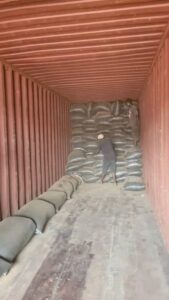
6. Packaging
Cocoa shells may be supplied in different packaging formats depending on the buyer’s requirements and shipping arrangement.
Common options can include:
- Woven PP bags
- Jumbo/FIBC bags
- Other agreed packaging arrangements
Packaging affects handling, storage and loading efficiency and can therefore influence the final commercial price.
7. Quantity
Quantity is another important pricing factor.
A 25 MT order should not automatically be expected to receive the same price per metric ton as a larger recurring order.
Larger volumes can provide a different commercial basis depending on:
- Availability
- Preparation requirements
- Packaging
- Loading arrangements
- Shipping economics
- Contract duration
For buyers planning recurring purchases, it can therefore be useful to discuss monthly or quarterly requirements rather than only a single shipment.
What Is the Right Way to Compare Cocoa Shell Quotations?
Suppose a Cambodian importer receives three offers:
| Supplier | Price basis | Quoted price |
|---|---|---|
| Supplier A | FOB Nigeria | US$X/MT |
| Supplier B | CFR Cambodia | US$Y/MT |
| Supplier C | CIF Cambodia | US$Z/MT |
The buyer should not immediately choose Supplier A simply because X is the lowest number.
Instead, calculate the estimated landed cost for each offer.
The comparison may include:
Product price + ocean freight + insurance where applicable + destination charges + customs duties/taxes + clearance + local handling
The buyer should also confirm that all three suppliers are offering comparable:
- Product quality
- Moisture
- Ash
- Foreign matter
- Particle size
- Packaging
- Quantity
- Shipment period
Only then can the buyer make a meaningful price comparison.
What Should a Cambodian Buyer Ask a Nigerian Cocoa Shell Supplier?
Before accepting a quotation, a Cambodian importer should request clear information about both the product and the commercial terms.
Product
- Cocoa shells
- Country of origin
- Intended application
- Available quantity
Quality
- Moisture
- Ash
- Calorific value where relevant
- Foreign matter
- Particle size
- Other application-specific parameters
Commercial terms
- Quantity
- Packaging
- Incoterm
- Loading port
- Destination port
- Shipment schedule
- Payment terms
Documentation
Depending on the product, destination and applicable requirements, buyers may need documents such as:
- Commercial invoice
- Packing list
- Bill of lading
- Certificate of origin
- Certificate of Analysis
- Phytosanitary certificate where applicable
- Fumigation certificate where applicable
- Other documents required by Cambodian authorities
Importers should confirm current Cambodian customs, plant-quarantine and import requirements with their customs broker and the relevant authorities before shipment.
What About Cambodia’s Import Duties and Taxes?
Cambian importers should not assume that the product price is the only cost involved.
Import duties, taxes and other charges depend on the applicable tariff classification, origin, customs value and current Cambodian regulations.
At the six-digit level, cocoa shells, husks, skins and other cocoa waste fall under:
HS 180200
However, the Cambodian importer should confirm the applicable eight-digit AHTN classification, duty rate, taxes and other import requirements before placing an order.
This is particularly important when calculating landed cost.
A supplier quotation alone does not establish the buyer’s final import cost.
Should Buyers Ask for a Cocoa Shell Sample?
For a new supplier relationship, requesting a sample can be a sensible step.
The buyer may want to evaluate:
- Physical appearance
- Cleanliness
- Moisture
- Particle characteristics
- Odour
- Suitability for the intended application
For larger transactions, independent inspection or laboratory testing can also be included in the commercial arrangement where appropriate.
The important point is that the sample should represent the material that will actually be supplied.
The final purchase specification should also be clearly documented in the commercial agreement.
How Much Do Nigerian Cocoa Shells Cost in Cambodia?
There is no responsible way to give every Cambodian buyer one fixed Nigerian cocoa-shell price.
The commercial price depends on:
Quantity + specification + packaging + loading port + destination + Incoterm + shipment timing + payment terms.
Historical trade statistics can provide useful context about international trade flows, but they should not be treated as a current 2026 price quotation.
A Cambodian buyer looking for a current price should request a quotation based on the actual shipment requirement.
For example:
100 MT | Nigerian origin | Biomass application | FIBC | Sihanoukville | CFR/CIF | October shipment
This gives the supplier enough information to evaluate the requirement and prepare a commercially meaningful offer.
Example of a Good Cocoa Shell Price Enquiry
Instead of sending:
“How much is cocoa shell per ton?”
A professional buyer can send:
Product: Cocoa shells
Origin: Nigeria
Quantity: 100 MT
Application: Biomass fuel
Specification: Please provide your current commercial specification
Packaging: FIBC/Jumbo bags
Destination: Sihanoukville, Cambodia
Trade term: CFR/CIF
Shipment: Required shipment month
Payment: To be discussed
This gives the supplier the information needed to prepare a proper quotation.
What Does Enbri Nig. Ltd. Offer?
Enbri Nig. Ltd. supplies Nigerian-origin cocoa shells for international bulk buyers.
The company works with buyers who require cocoa shells for applications including:
- Biomass fuel
- Pellet and briquette production
- Organic fertilizer
- Composting
- Other industrial and agricultural applications
For Cambodian buyers, supply can be discussed on an FOB Nigeria or destination freight-inclusive basis, depending on the requirement.
Enbri’s current commercial supply capacity is approximately 75–150 MT per month, subject to availability, specification and confirmed orders.
Packaging can include:
- Woven PP bags
- Jumbo/FIBC bags
- Other agreed arrangements where commercially suitable
The final specification, packaging, quantity, payment terms and shipping arrangement are agreed before an order is confirmed.
Learn more about our Cambodia-focused supply information on our Cocoa Shell Supplier Cambodia page.
What Information Do We Need to Quote Cocoa Shells to Cambodia?
A Cambodian importer requesting a quotation should provide:
- Required quantity
- Intended application
- Required specification
- Preferred packaging
- Destination port
- Required shipment period
- Preferred Incoterm
For example:
100 MT | Biomass | FIBC | Sihanoukville | CFR | October shipment
With these details, a Nigerian supplier can evaluate the requirement and provide a more useful commercial quotation.
Frequently Asked Questions
What is the price of cocoa shells in Cambodia?
There is no single fixed price.
The price depends on origin, specification, quantity, packaging, freight, destination, Incoterm and shipment timing.
Historical trade statistics can provide a market reference, but they should not be treated as a current 2026 supplier quotation.
How much are Nigerian cocoa shells per ton?
The current price depends on the buyer’s quantity, specification, packaging, destination and shipping terms.
For an accurate quotation, a Cambodian buyer should provide the required quantity and destination port and specify whether the quotation should be FOB, CFR or CIF.
Is Nigeria already exporting cocoa shells to Cambodia?
Yes. Historical trade records show Nigeria-Cambodia trade under HS 180200, which covers cocoa shells, husks, skins and other cocoa waste.
This demonstrates that Nigerian origin already participates in the Cambodian market.
What is the HS code for cocoa shells?
The six-digit international HS code is 180200 for cocoa shells, husks, skins and other cocoa waste.
Cambodian importers should confirm the applicable eight-digit AHTN classification before shipment.
Is FOB cheaper than CIF Cambodia?
Not necessarily.
FOB normally has a lower headline price because the main ocean freight is handled separately by the buyer.
CIF includes carriage and insurance to the named destination port.
The correct comparison is the estimated total landed cost.
Can Enbri quote cocoa shells to Cambodia?
Yes.
Enbri Nig. Ltd. can discuss Nigerian-origin cocoa shell supply based on the buyer’s quantity, specification, packaging, destination and shipping requirements.
How much cocoa shell can Enbri supply?
Current commercial supply capacity is approximately 75–150 MT per month, subject to availability, specification and confirmed orders.
What port can Cambodian buyers use?
The destination port should be specified by the buyer when requesting a quotation.
For Cambodian imports, Sihanoukville Autonomous Port may be relevant depending on the buyer’s logistics arrangement and final delivery location.
The supplier can then evaluate the applicable freight and shipping terms.
Conclusion: How Cambodian Buyers Should Evaluate Cocoa Shell Prices
For Cambodian importers, the right question is not simply:
“What is the price of cocoa shells per ton?”
The better question is:
“What is the landed cost of cocoa shells that meet my required specification, delivered to my destination?”
Cambodia has an established international market for cocoa shells and related cocoa waste under HS 180200, with supply coming from several origins, including Nigeria.
For Nigerian suppliers, this provides an existing commercial route into the Cambodian market.
However, historical trade values should be treated as market context rather than today’s selling price.
Before agreeing on a cocoa shell price, confirm:
Specification → Quantity → Packaging → Incoterm → Destination → Freight → Import costs → Inspection → Payment terms.
That is the basis for making a meaningful cocoa-shell price comparison.
If you are a Cambodian importer, biomass producer, fertilizer manufacturer, compost producer, biochar company or commodity trader looking for Nigerian cocoa shells, send us your quantity, application, specification and destination port for a commercial quotation.
Enbri Nig. Ltd. — Nigerian Cocoa Shell Supply for International Buyers
Request a Cocoa Shell Quotation from Nigeria via WhatsApp