
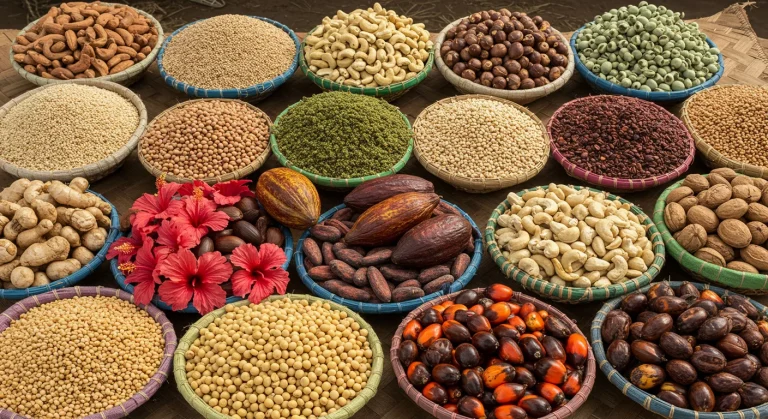
Top 15 Profitable Agricultural Products to Export from Nigeria in 2026
Nigeria continues to position itself as a major player in the global agricultural export market. With increasing demand for organic, natural, and sustainably sourced products worldwide, Nigerian exporters have a golden opportunity to tap into high-value international markets in 2026.
If you’re looking to start or scale an agro-export business, this guide highlights the top profitable agricultural products to export from Nigeria, along with insights into market demand, profitability, and export potential.
Why Agricultural Export is Booming in Nigeria
Agriculture contributes significantly to Nigeria’s economy, and exports are gaining traction due to:
- Rising global demand for natural and organic products
- Favorable climate for year-round farming
- Government support for non-oil exports
- Access to international markets through trade agreements
Exporting agricultural products not only generates foreign exchange but also offers entrepreneurs a scalable and sustainable business model.
Top 15 Profitable Agricultural Products to Export in 2026
1. Sesame Seeds
Sesame seeds remain one of Nigeria’s top agricultural exports, with strong demand in Asia and the Middle East.
Why export it?
- High oil content
- Used in food processing and cosmetics
- Premium prices in international markets
2. Cocoa Beans
Nigeria is among the top cocoa producers globally.
Export advantage:
- Essential raw material for chocolate production
- High demand in Europe and North America
- Stable global pricing
3. Ginger
Nigerian ginger is highly sought after due to its strong aroma and oil content.
Key markets: India, UAE, USA
Uses: Food, beverages, pharmaceuticals
4. Cashew Nuts
Cashew nuts offer excellent export value, especially when processed.
Why profitable?
- High global consumption
- Value addition through processing
- Long shelf life
5. Shea Butter & Shea Nuts
Widely used in cosmetics and skincare industries.
Export potential:
- Strong demand in Europe and the US
- Organic and natural product trend
- High profit margins
6. Bitter Kola
A niche but highly valuable export product.
Benefits:
- Medicinal properties
- Growing demand in diaspora markets
7. Kola Nuts
Traditionally consumed in many cultures.
Export opportunities:
- Cultural significance in Africa and diaspora
- Used in beverages and pharmaceuticals
8. Tiger Nuts
Tiger nuts are gaining popularity as a superfood.
Why export?
- Used for milk production (e.g., tiger nut milk)
- Gluten-free and healthy snack option
9. Groundnuts (Peanuts)
A versatile crop with multiple uses.
Export uses:
- Oil production
- Snacks and confectionery
- Animal feed
10. Palm Kernel Cake (PKC)
A by-product of palm oil processing.
Export demand:
- Used in animal feed
- Affordable protein source
11. Cassava Chips
Cassava chips are widely exported for industrial use.
Key markets: China, Europe
Uses: Ethanol production, animal feed
12. Charcoal (Hardwood)
Nigeria exports large quantities of hardwood charcoal.
Why it’s profitable:
- High demand in Europe and the Middle East
- Used for heating and grilling
13. Moringa
Moringa is a highly nutritious plant with growing global demand.
Export potential:
- Used in supplements and herbal medicine
- High-value health product
14. Soya Beans
Soya beans are a staple in global food production.
Uses:
- Oil extraction
- Animal feed
- Plant-based protein products
15. Hibiscus Flower (Zobo)
A fast-rising export product.
Why export?
- Used for beverages and herbal teas
- High demand in Mexico and Europe
Key Factors for Success in Agro Export
To succeed in exporting agricultural products from Nigeria, you must consider:
1. Quality Standards
Ensure your products meet international standards such as:
- Proper cleaning and sorting
- Moisture control
- Packaging compliance
2. Certifications
Obtain necessary certifications like:
- Phytosanitary certificate
- SONCAP (if required)
- Organic certification (for premium markets)
3. Market Research
Identify:
- High-demand countries
- Pricing trends
- Buyer requirements
4. Logistics & Shipping
Efficient logistics is key:
- Choose reliable freight forwarders
- Understand export documentation
- Ensure timely delivery
Challenges in Agricultural Export (and How to Overcome Them)
While agro export is profitable, it comes with challenges:
Common issues:
- Poor storage facilities
- Inconsistent supply
- Export documentation complexity
Solutions:
- Partner with reliable farmers
- Invest in storage and processing
- Work with export consultants
Final Thoughts
The agricultural export sector in Nigeria is filled with untapped opportunities. With the right strategy, quality control, and market knowledge, you can build a highly profitable export business in 2026.
Whether you’re a beginner or an established entrepreneur, focusing on high-demand products like sesame seeds, cocoa, ginger, and cashew nuts can set you on the path to success.